

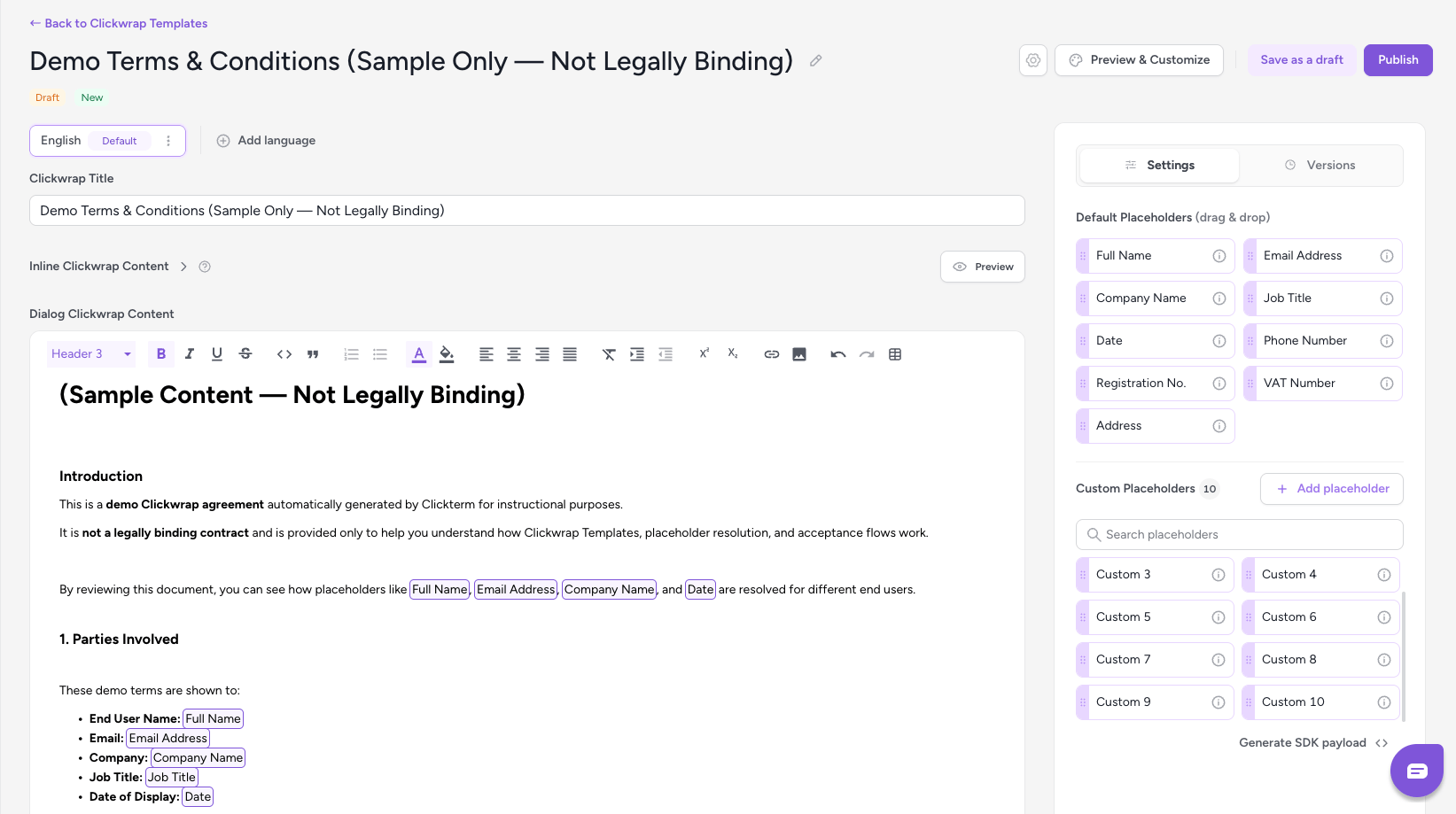
Template content editor
Templates with new content are always created as drafts. They are not visible
to your end users and cannot be used in integrations until you publish them.
Clickwrap Content
The large text area labeled Clickwrap Content is where you write or paste the content of your legal document. This is the main body your end users will see when the clickwrap dialog is presented. The editor supports headings, lists, quotes, code blocks, links, images, and tables as well as basic formatting options.Inline Content
Starting from SDK v2.2.0, templates can include Inline Content — a short consent line displayed as an inline checkbox on your page (instead of a full modal dialog). You can configure inline content in the editor above the clickwrap content section.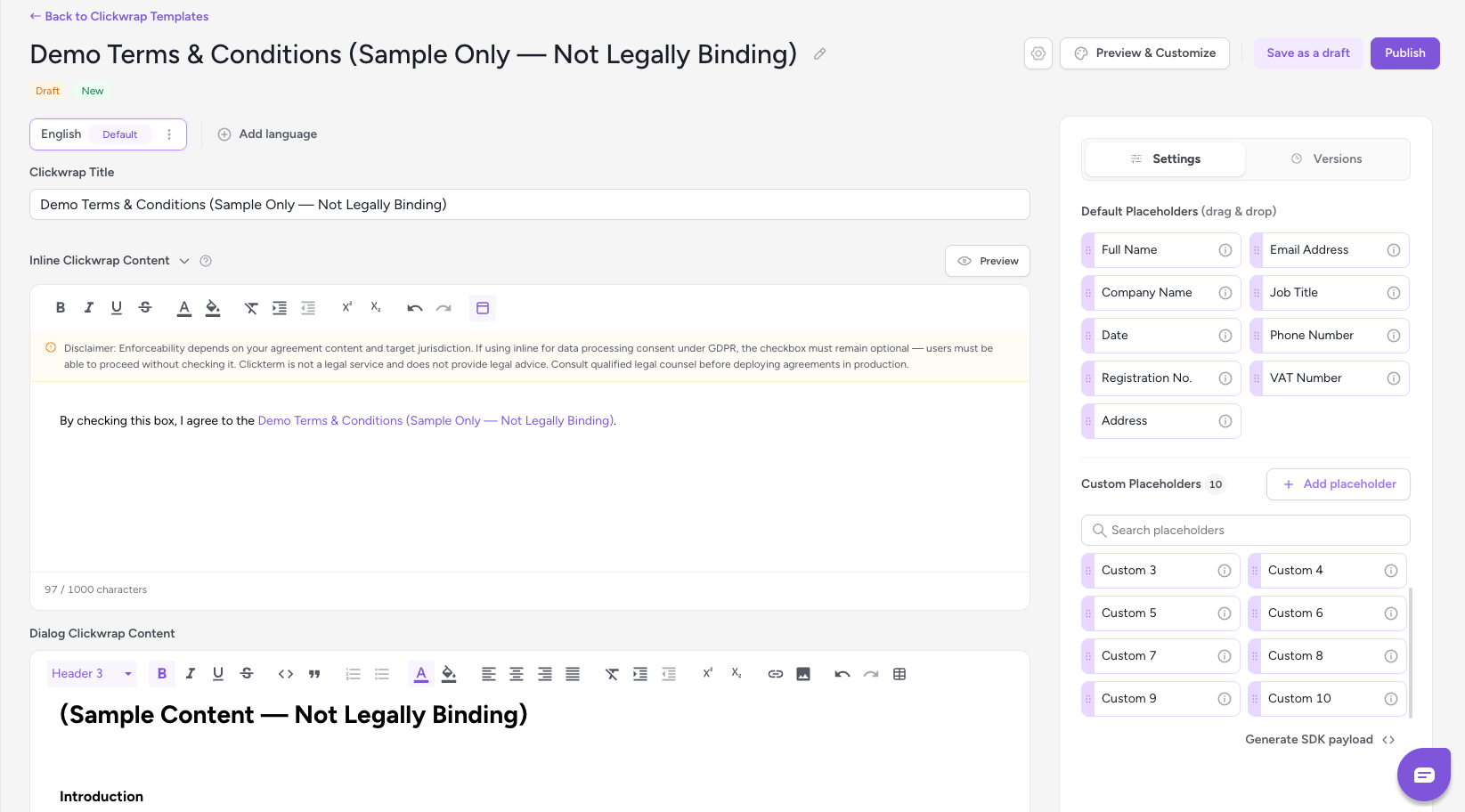
Template editor showing Inline Content and Clickwrap Content sections
Inline content is optional. If you only use dialog mode (
ClicktermDialog.show()), you do not need to configure it. It is required only when using inline mode (ClicktermDom.renderInline()). See Displaying an inline clickwrap.Language
The platform supports a wide range of languages. You can manage languages by adding or removing them, selecting a default language, and configuring language-specific titles and content. See supported languages for the full list.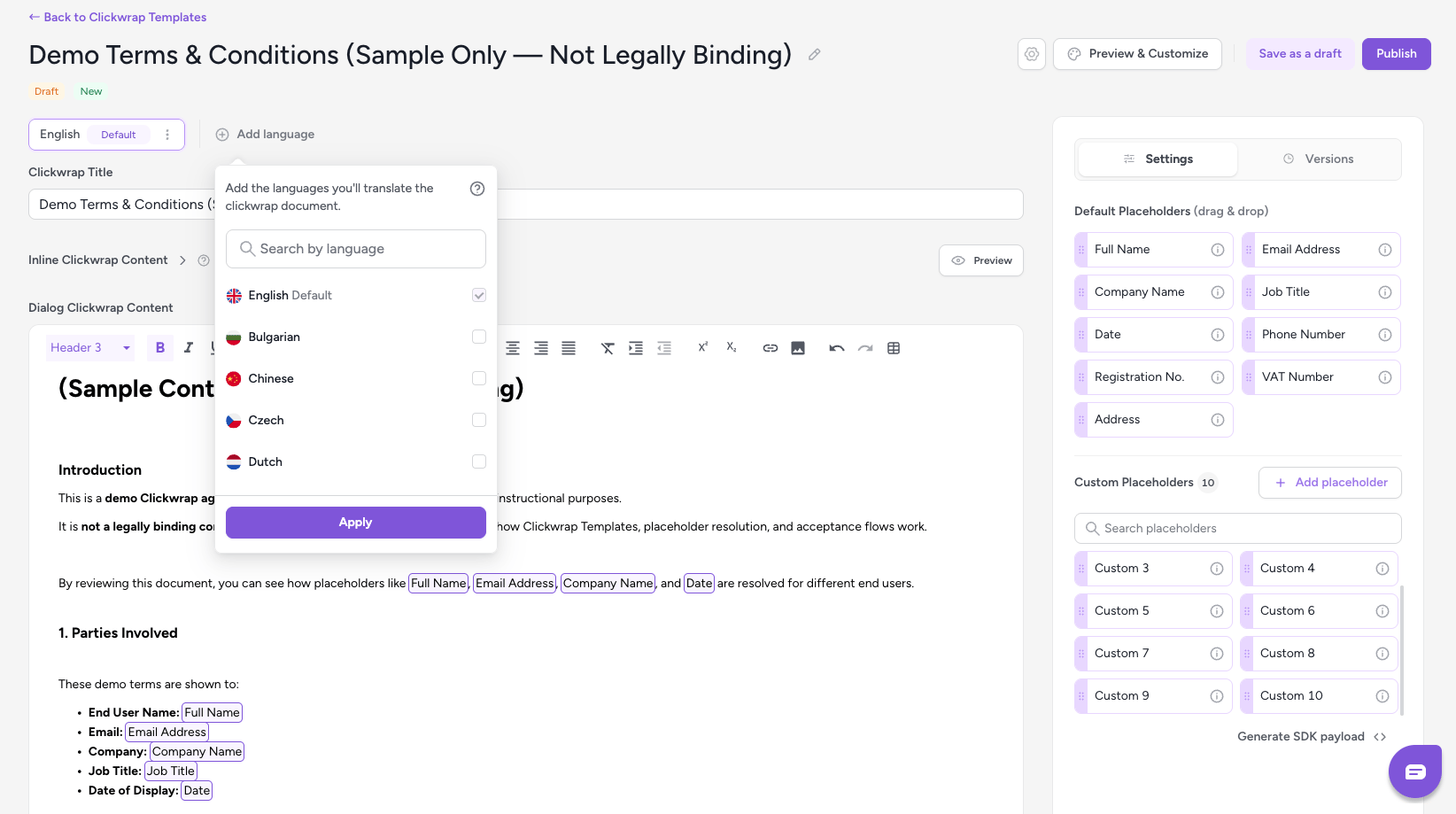
Language management
Versions panel
On the right side, you will see the Versions tab. Every template starts with a single draft version created automatically.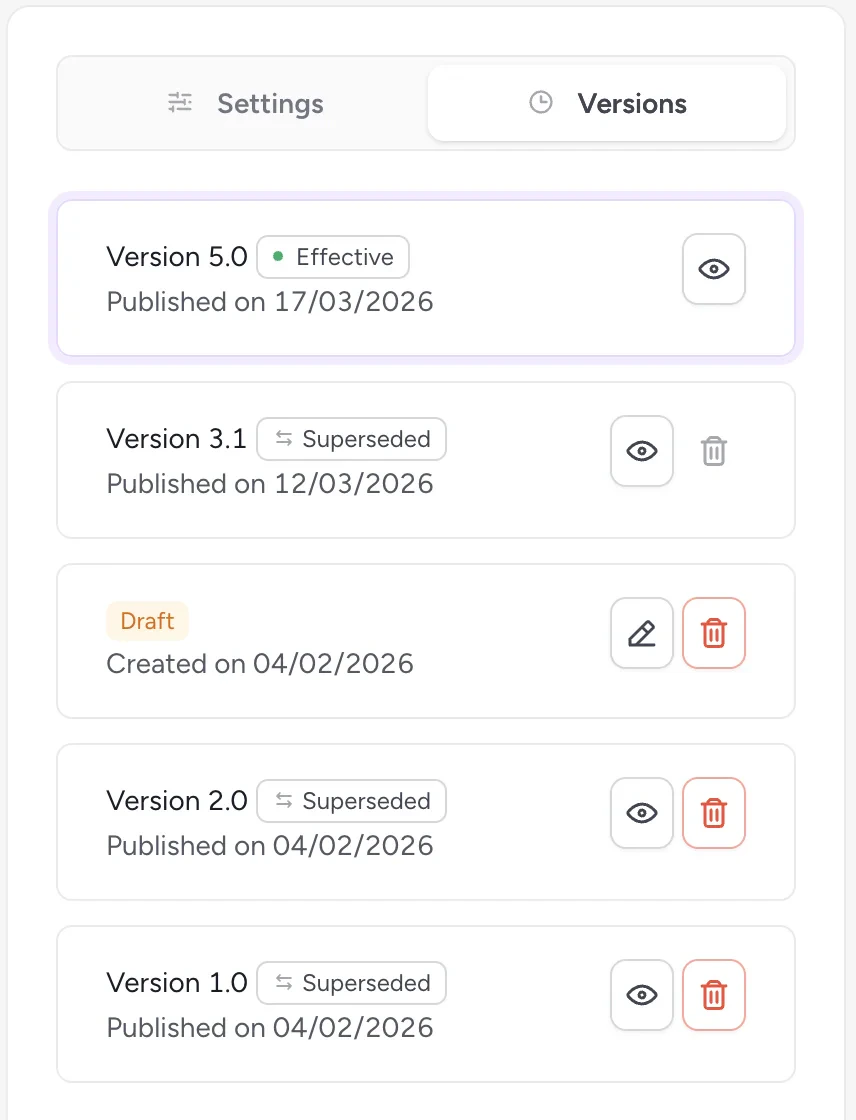
Versions panel
- See when it was published or created
- Edit the version if it is a draft
- Delete the version (only if it is still a draft or has no linked events)
A template is not active until you publish its first effective version.
Settings tab
The Settings tab allows you to configure additional options for your template. These settings apply to the template as a whole and influence how the content is displayed during clickwrap flows. The content of this tab varies depending on whether you are viewing a draft or a published version: Draft version: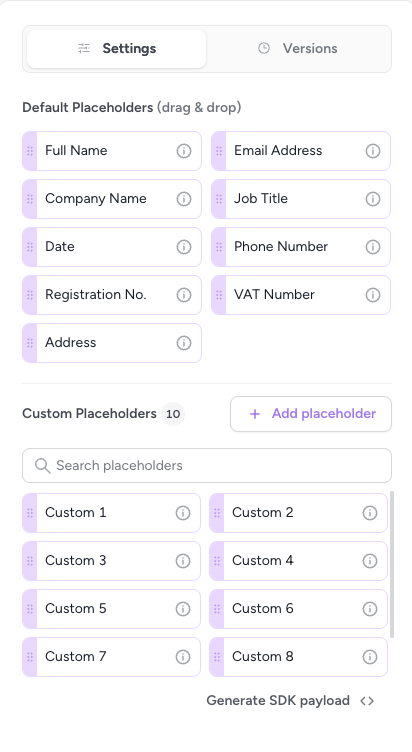
Settings tab — draft version
- Configure placeholders to dynamically insert user-specific data into the document.
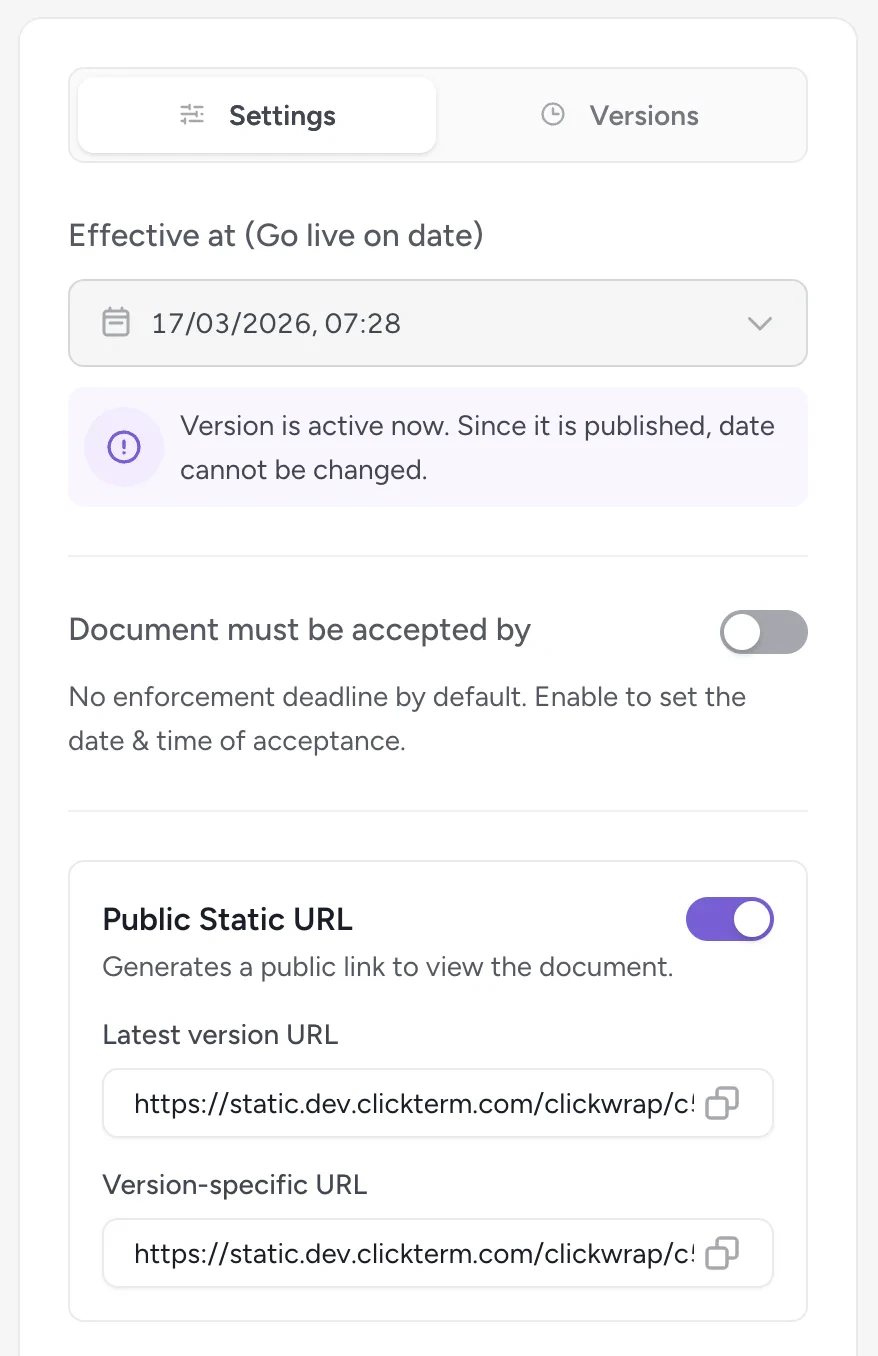
Settings tab — published version
- Effective at (Go live on date) — The date and time when the version becomes (or became) active.
- Document must be accepted by — An optional date and time indicating when end users are expected to accept the clickwrap. This serves as informational guidance only.
- Public Static URL settings — Generates a public link that allows the document to be viewed externally.
Save as draft and publish
In the top-right corner, you have two actions:- Save as a draft — saves your changes without publishing them
- Publish — locks the content and saves it as a new, immutable version
Effective at time is reached; any updates require creating a new version.
Add new version
If you return to an existing template later, you can click Add new version to create a new editable draft based on the previous content. This is how you update legal documents over time while maintaining a full version history.Related
Placeholders
Insert dynamic fields into your templates.
Version types & lifecycle
Understand major vs. minor versions and lifecycle states.
Widget appearance
Customize how the clickwrap dialog looks for end users.